BLEEDING AND CLOTTING DISORDERS
Dr. Dewa treats a wide variety of haematology conditions.
Read more about some conditions below.
LEUKEMIA
LYMPHOMA
MULTIPLE MYELOMA
ANEMIA
BLEEDING AND
CLOTTING DISORDERS
BLEEDING AND CLOTTING DISORDERS
What are bleeding and clotting disorders?
Under normal circumstances, the human body maintains a balance between thrombosis and bleeding. This balance is achieved by interplay between clotting factors, platelets, and the blood vessel wall. Thrombosis occurs when there is excess blood clotting, and abnormal bleeding happens when there is a shortage or dysfunction of platelets, clotting factors, or the blood vessel wall.
Common bleeding disorders include conditions like:
Haemophilia:
This inherited disease affects males almost exclusively. Haemophilia is classified into mild (5%-40% factor level), moderate (1%-5%), and Severe (<1% factor level), depending on the factor level in one’s body.
SYMPTOMS
Intra-articular or deep muscle bleeding that may be spontaneous
Nose bleeds and easy bruising
CAUSES
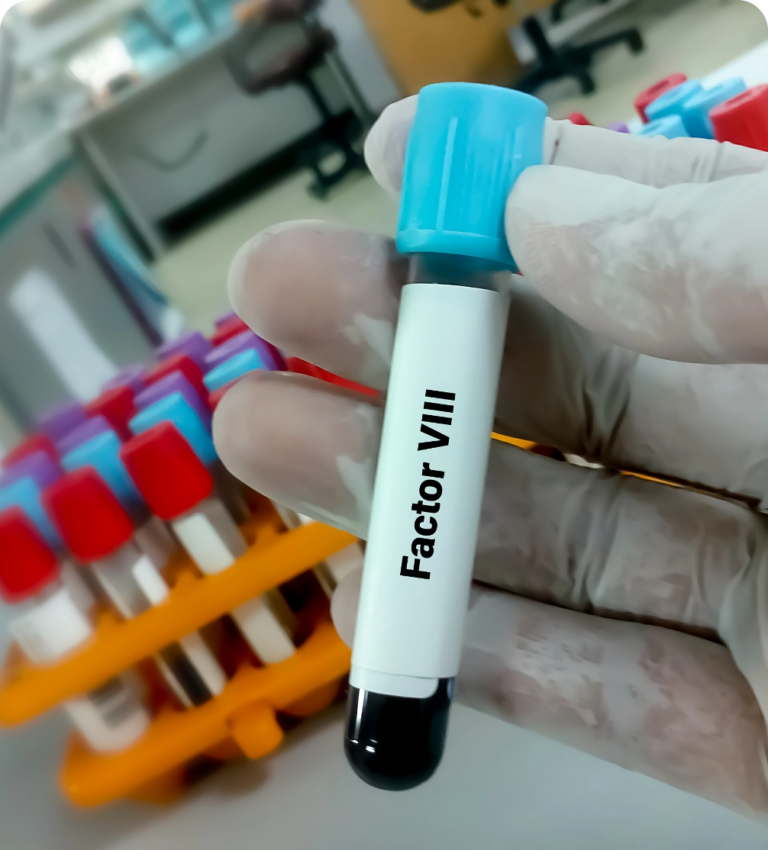
It is caused by a deficiency of clotting factor VIII (Haemophilia A) or factor IX (Haemophilia B).
TREATMENT
Treatment involves factor replacement via intravenous injection, among other adjunctive measures.
Von Willebrand Disease (vWD):
One of the most common inherited bleeding disorders is caused by a deficiency or dysfunction of the von Willebrand factor (vWF), one of the clotting factors involved in normal blood clotting. The diagnosis is made by measuring the levels of vWF in the blood and other tests.
SYMPTOMS
Nose bleeds and easy bruising
Gum bleeds
Excessive menstrual blood loss
CAUSES
Largely inherited disease.
Some haematological diseases like Essential Thrombocytosis may cause an acquired form.
TREATMENT
Treatment, under the guidance of medical professionals, includes injections of vWF, clotting factor concentrates, and other medications to reduce bleeding tendencies.
Platelet Disorders:
Bleeding can result from low platelet counts (thrombocytopenia) or low-quality platelets. The diagnosis is made by measuring the number of platelets on the Full Blood count and other special tests for platelet function. Some medications, like Aspirin, can affect platelet function and cause bleeding. People taking “Blood thinners” like warfarin, Xarelto, etc., may also bleed due to clotting factor problems caused by the medications.
SYMPTOMS
Nose bleeds and easy bruising
Gum bleeds
Excessive menstrual blood loss
Thrombotic Disorders:
This happens when blood has an increased tendency to clot. The problem can be inherited or acquired later in life. Examples include anti-phospholipid syndrome (acquired), inherited thrombophilias like Factor V Leiden, and prothrombin gene mutation. The presentation may be unprovoked clots in the leg or the lung. Some people may develop these clots after undergoing surgery, during pregnancy, or after being inactive for a prolonged time. Blood tests, sonography, and CT scans make diagnosis.
SYMPTOMS
Depending on where the clot is, symptoms include leg discomfort and pain, chest pain, shortness of breath, and fast heart rate.
CAUSES
Genetic disorders
Medications like contraceptives in some people
Prolonged best rest/immobility
After some surgical procedures
TREATMENT
Treatment, which involves using blood thinners (anticoagulants), has proven to be effective. The duration of treatment is dependent on the cause of the clot and the risk of recurrence.